

Anyone looking to sell Bitcoin should consider more than just the current price. The platform, fees, taxes, and minor technical details determine how much actually ends up in your bank account. This guide shows you step-by-step how selling works and seven mistakes you absolutely must avoid.
Selling Bitcoin – Key Takeaways
Bitcoin can be exchanged for euros via regulated platforms like 21bitcoin in just a few minutes.
Key considerations are spread, fees, payout method and – depending on the country – the tax treatment.
In Germany, the current rule is the one-year holding period (as of 2026, reform discussions ongoing); in Austria, capital gains are subject to the KESt (27.5%).
Most common mistakes: panic selling, ignoring fees, incorrect recipient IBAN, missing documentation.
When is the right time to sell Bitcoin?
There is no perfect time. It's more sensible to establish clear reasons and rules beforehand to define, rather than reacting emotionally to price movements.
Personal Reasons vs. Market Sentiment
Typical Reasons for Selling:
- Major Purchase (Car, Real Estate, Down Payment)
- Portfolio Rebalancing
- Closing a Position for Tax Reasons
- Liquidity Needs
It is less advisable to sell purely out of panic during corrections. Those who are invested long-term have often benefited in the past from riding out volatility instead of trading it.
Partial Sale Instead of All-in Exit
In many cases, a partial sale: You realize some of your profits or cover your cash needs, but keep a portion for your long-term savings strategy.
Selling Bitcoin in 5 Steps
1. Choose Platform and Account
You need a regulated platform where you can exchange Bitcoin for Euros – for example, a Bitcoin-only wealth app like 21bitcoin. Look for:
- Regulation (e.g., MiCAR in the EU)
- Registered Office and Banking Partner
- Transparent Fee Structure
2. Send Bitcoin to the platform (or if you already hold them there)
If you hold your Bitcoin in Self-Custody (e.g., custody via hardware wallet), send them to your deposit address on the platform.
Important:
- Always double-check the address
- For larger amounts, start with a test amount
- Pay attention to network fees
If your Bitcoin are already with 21bitcoin, this step is not necessary.
3. Place a sell order
In the app, you select:
- The Amount (in BTC or Euro)
- Optional: the Target price (if limit order functions are available)
- The Sell confirmation
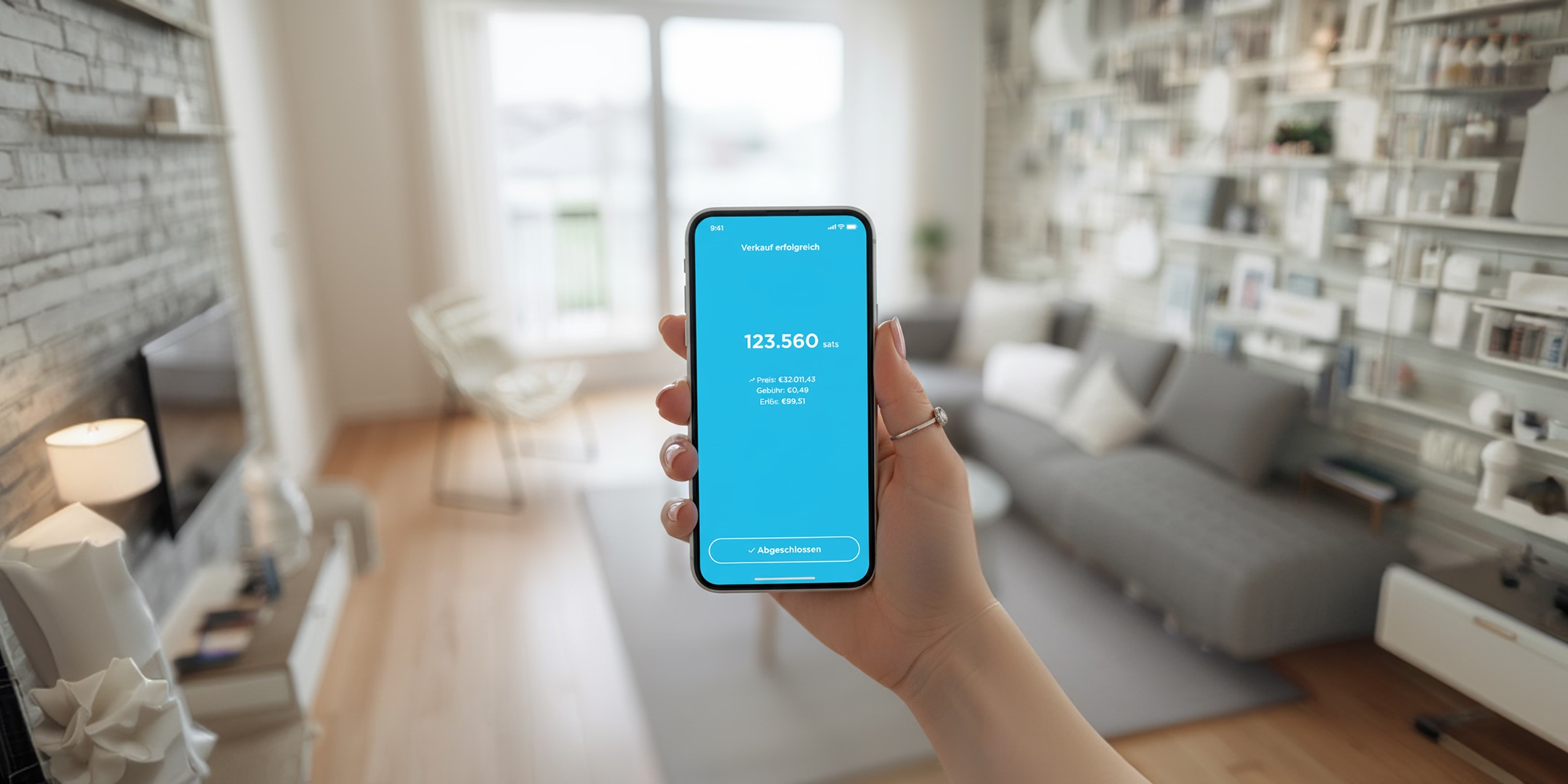
The price is fixed at the time of confirmation. Spread and fees are displayed transparently.
4. Payout to your bank account
After the sale, the Euro amount lands in your platform wallet. From there, you can have it paid out via SEPA transfer to your linked bank account. Depending on the bank, this takes a few minutes to 1-2 business days.
5. Document the transaction
For tax and record-keeping you should:
- Export the sales receipt / transaction report
- Save the date, quantity, price, and equivalent value
- If relevant: assign acquisition date and price (FIFO)
Where can I sell Bitcoin?
Costs when selling Bitcoin: Spread, fees, network
When selling, you typically incur:
- Spread between buy and sell price
- Service or trading fee of the platform
- Network fee, if you first send Bitcoin to the platform
- SEPA payout – often free
Rule of thumb: The more transparent a platform is about the total costs it discloses, the better.
Taxes on Bitcoin sales in Germany and Austria
This section provides general information and does not constitute individual tax advice.
Deutschland: Haltefrist & aktuelle Reform
In Deutschland gilt Bitcoin steuerlich als privates Veräußerungsgeschäft (§ 23 EStG). Aktuell heißt das vereinfacht:
- Verkauf nach mehr als einem Jahr Haltefrist → steuerfrei
- Verkauf innerhalb eines Jahres → Gewinne sind als Einkommen zu versteuern, sofern die Freigrenze überschritten wird
Die Abschaffung der Haltefrist ist politisch in Diskussion. Wer betroffen sein könnte, sollte den Stand vor einem Verkauf prüfen.
Österreich: 27,5 % KESt
In Österreich greift seit der Krypto-Steuerreform der besondere Steuersatz für Kapitaleinkünfte: 27,5 % KESt auf realisierte Gewinne aus dem Verkauf von Bitcoin – unabhängig von der Haltedauer (für Anschaffungen ab dem Stichtag der Neuregelung).
Wichtig in beiden Ländern: Verkaufsbelege und Anschaffungsdaten sauber dokumentieren.
7 typische Fehler beim Bitcoin-Verkauf und wie du sie vermeidest
- Aus Panik verkaufen. Korrekturen gehören zu Bitcoin. Wer ohne klaren Grund mitten im Drawdown verkauft, realisiert oft Verluste oder verpasst die Erholung.
- Gebühren und Spread ignorieren. Nicht nur die ausgewiesene Gebühr zählt, sondern auch der Spread. Vorher gegenrechnen, was netto auf dem Konto ankommt.
- Falsche oder unverifizierte IBAN. Auszahlungen auf ein nicht verifiziertes Konto werden abgelehnt oder verzögert. Vorab prüfen, ob das Zielkonto bei der Plattform hinterlegt ist.
- Bitcoin an falsche Adresse senden. Beim Transfer aus der Self-Custody: Adresse kopieren, kontrollieren, mit Testbetrag beginnen. Fehlüberweisungen sind in der Regel unwiderruflich.
- Steuerliche Lage nicht prüfen. Wer beispielsweise kurz vor Ablauf der Haltefrist (DE) verkauft, zahlt unnötig Steuern.
- Alles auf einmal verkaufen. Ein gestaffelter Ausstieg (z. B. in Tranchen) reduziert das Timing-Risiko – analog zum Sparplan beim Kauf.
- Kein Backup der Transaktionshistorie. Spätestens bei der Steuererklärung wirst du jeden Beleg brauchen. Reports regelmäßig exportieren und sichern.
Bitcoin verkaufen mit 21bitcoin
21bitcoin ist eine Bitcoin-only-Wealth-Plattform mit Sitz in Salzburg und MiCAR-Lizenzierung. Verkauf und Auszahlung laufen in drei klaren Schritten:
- In der App Verkaufen wählen, Betrag und Bestätigung.
- Euro-Guthaben wird gutgeschrieben.
- SEPA-Auszahlung auf dein verifiziertes Bankkonto.
Der Fokus auf Bitcoin sorgt dafür, dass die App schlank bleibt – ohne Altcoin-Ablenkung, mit transparenter Gebührenstruktur.
FAQ – Bitcoin verkaufen
Wie schnell habe ich das Geld auf dem Konto?
Der Verkauf erfolgt in Sekunden, die SEPA-Auszahlung in der Regel innerhalb von Minuten bis 1–2 Werktagen, abhängig von deiner Bank.
Kann ich nur einen Teil meiner Bitcoin verkaufen?
Ja. Du kannst beliebige Teilbeträge verkaufen.
Muss ich meine Bitcoin erst auf die Plattform senden?
Nur wenn du sie in Self-Custody hältst. Liegen sie bereits bei der Plattform, kannst du direkt verkaufen.
Ist es sinnvoller, Bitcoin zu halten statt zu verkaufen?
Das hängt von deinem Anlagehorizont, deiner Risikobereitschaft und deinem Liquiditätsbedarf ab. Viele Langfrist-Investoren verkaufen nur in Tranchen oder gezielt bei großen Anschaffungen.
Hinweis: Marketingmitteilung der FIOR Digital GmbH (21bitcoin). Investitionen in Bitcoin sind mit Risiken und Chancen verbunden. Vergangene Wertentwicklungen sind kein Indikator für zukünftige Entwicklungen.